
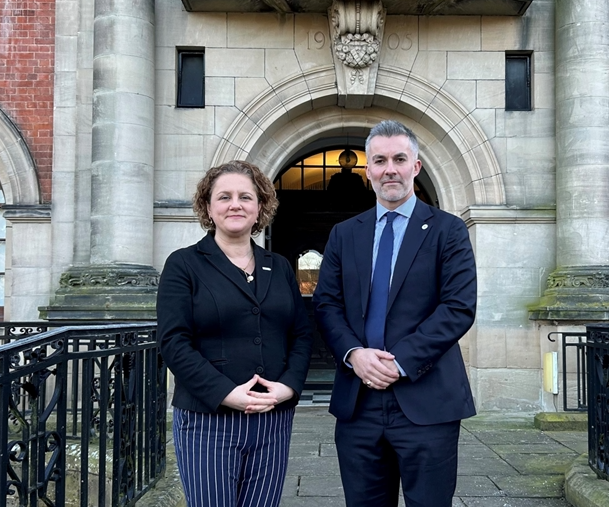
Responding to remarks from Met Police Chief Sir Mark Rowley about police reforms which call for a small number of mega regional police forces, David Skaith, Mayor of York and North Yorkshire and Jo Coles, Deputy Mayor for Policing, Fire and Crime have called for Strategic Mayoral Authorities to be the default structure in police reforms being considered by the Government.
David Skaith, Mayor of York and North Yorkshire said:
‘Mega forces’ are a threat to neighbourhood policing in York and North Yorkshire, especially in our rural communities. They would inevitably see resources diverted to large cities, leaving towns and villages at risk of becoming hotspots for crime. That is unfair to North Yorkshire taxpayers, who provide almost half of the funding for policing.
I am deeply concerned about the impact that removing policing from a core principle of devolution, the alignment of public services with mayoral boundaries, would have on the cohesive approach we want to take to early intervention and prevention. This is particularly important given how closely interconnected outcomes in health, education and employment are with crime.
There is more to do. Nobody disagrees that the police need to improve and that reform is necessary. But that reform should be rooted in collaboration, not top-down reorganisation.
Local accountability has never diminished the police’s ability to work across boundaries to tackle cross-border issues such as organised county lines crime, fraud, cyber crime and counter-terrorism. That is why I support the creation of a strengthened national police service, but not at the cost of the crucial and intrinsic link between the police and the communities they serve.
Policing must be, and must feel, local: rooted in the community, serving and protecting those communities, and operating with their consent. These proposals must not seek to strip away the valuable role that local accountability has to offer.
North Yorkshire Police is a good police force. It is efficient, provides good value for taxpayers, and its officers work hard every day to make North Yorkshire the safest county in the country. They should be able to continue that work without distraction.
Deputy Mayor for Policing, Fire and Crime, Jo Coles, said:
"Policing must adapt to the changing nature of crime. Cybercrime, fraud, child exploitation and organised criminal networks do not respect force boundaries. But it does not follow that bigger police forces are the answer. Serious and organised crime requires strong national capabilities and effective collaboration.
Policing cannot defeat modern crime alone. We need every partner around the table, all shoulders to the wheel; with Mayors helping to lead the response. Police reform will not automatically create more police officers, shorten our 6,000 miles of roads or remove the demands of 32 million visitors into York and North Yorkshire.
The test is not how policing could be organised differently. It is whether changes will make the public safer. Until that case is made with evidence rather than assertion, our priorities will continue to be what will make York and North Yorkshire safer. "
- Mayors are well placed to bring partners together. Tackling child online exploitation requires national expertise and police, probation, youth justice, children’s services, safeguarding, housing and health working closely together at a local level. Mayors can unite these agencies to address the causes of crime and prevent harm.
Crime is changing and complex crime demands national capabilities, regional collaboration and strong local intelligence, not mega police forces. Protests at Drax power station or against fracking proposals require a different approach from a march through central London. Local knowledge is essential, particularly when resources are limited
2. Size is not everything. Are we looking at budgets, officer numbers or square miles? North Yorkshire covers five times the area of the Metropolitan Police, with a fraction of its officers and budget. We need technology and systems that work efficiently in rural communities as well as towns and cities. Serious organised crime exists here, often hidden in rural areas. The response here must reflect our local circumstances.
With 6,000 miles of roads and seasonal pressures every summer, we know the importance of tackling cross border crime. Work by North Yorkshire Police and partners has dismantled 23 county lines in the last two years, with prosecutions resulting in more than 74 years of prison sentences.
- Regional collaboration already works. Our police officers work across Yorkshire and the Humber on organised crime, exploitation, cyber threats and major investigations. Specialist capabilities already operate regionally and nationally. There is no clear business case that the dismantling local forces would improve this.
A National Police Service could strengthen the response to national and international crime, including fraud and online child exploitation. Better governance of regional collaboration also makes sense. But mergers bring costs and disruption. Money spent on unnecessary restructuring will not improve frontline policing and pulls focus.
- Performance is more important than organisational size. If bigger automatically meant better, the largest forces would consistently outperform the rest. They do not. The real test is whether forces prevent crime, protect vulnerable people, catch offenders and maintain public confidence.
5. Public accountability must remain central. Hillsborough, Orgreave and the murders of Sarah Everard, Bibaa Henry and Nicole Smallman all damaged public trust. Most officers serve their communities with great honour and integrity, but the public must know policing always acts in their interests. Clear accountability is essential.