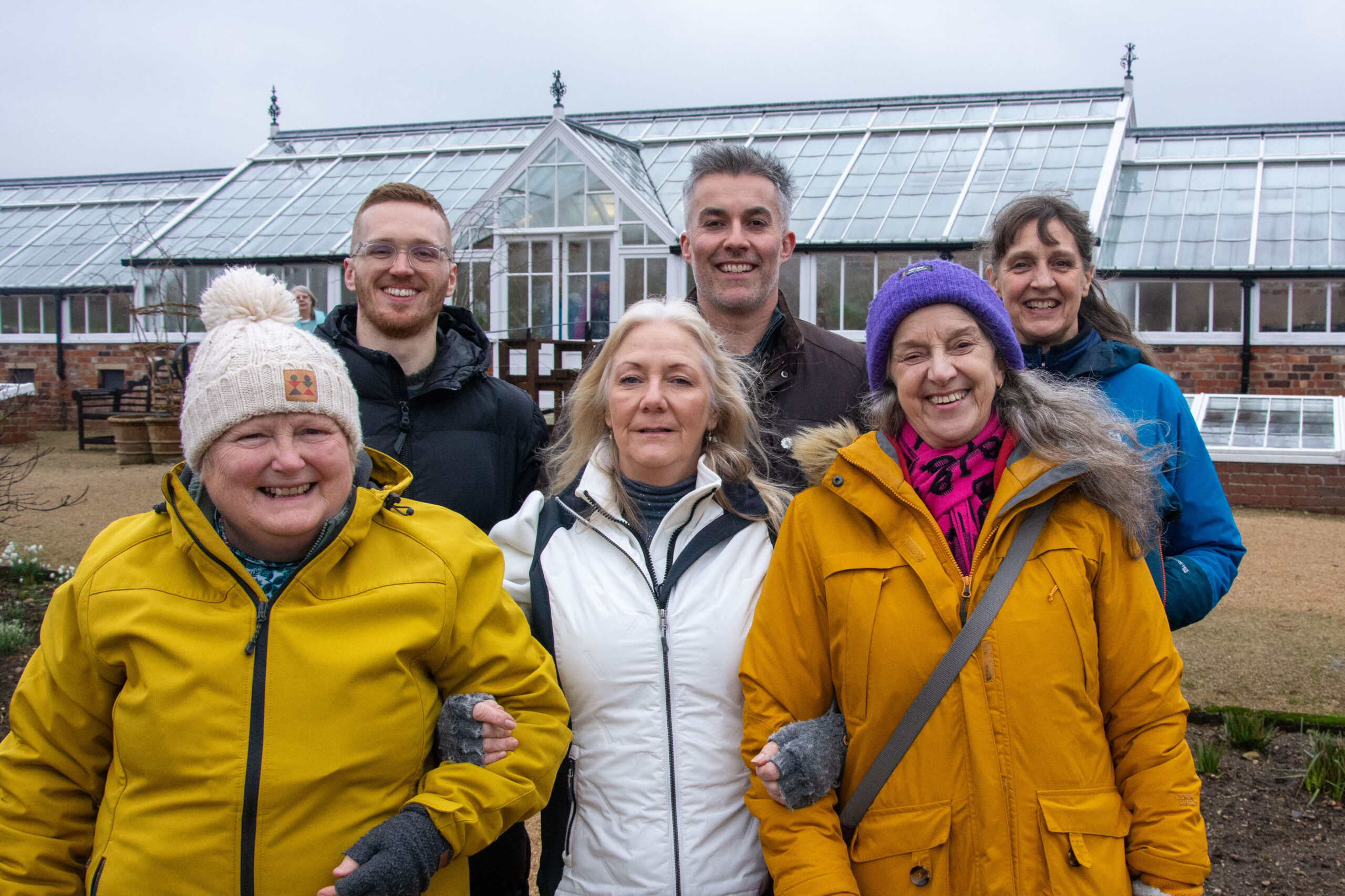
North Yorkshire is leading national innovation in health and wellbeing as the home of the UK’s first Protected Landscape-led Natural Health Service in delivery, according to a new regional report launched today (Wednesday 3 June) at Bolton Abbey in the Yorkshire Dales National Park.
Positioning the county as a testbed for a new green social prescribing model linking health and nature, the programme demonstrates how North Yorkshire’s natural assets can be harnessed to help people live healthier, more active, and more connected lives through the region’s National Parks and National Landscapes.
It comes at a critical time. Healthy life expectancy in North Yorkshire has fallen by 1.9 years for men and 2.3 years for women (Health Foundation, April 2026) (1), showing that while people are living longer, the number of years spent in good health is declining, placing growing pressure on individuals, communities, and services.
At the same time, rising levels of loneliness (ONS, February 2026) (2), linked to poor mental health and lower levels of physical activity, mean tackling social isolation is now recognised as a major public health priority.
With nearly half of North Yorkshire’s geography designated as Protected Landscape, one of the highest proportions in the UK, the region as a rural powerhouse is uniquely placed to use its natural environment to support health and wellbeing and improve outcomes. This opportunity is set to grow further with the expected designation of the Yorkshire Wolds as a National Landscape.
The programme, led by North York Moors Trust and supported by £100,000 from the York and North Yorkshire Combined Authority via the UK Government Shared Prosperity Fund, brought together a landmark partnership between the North York Moors National Park, Yorkshire Dales National Park, Howardian Hills National Landscape, and Nidderdale National Landscape. Together, they created a shared, place-based approach to delivering nature-based health support.
The initiative successfully reached people at higher risk of poor health outcomes, including individuals experiencing isolation, poor mental and physical wellbeing, inactivity, unemployment, caring responsibilities, and members of the armed forces community.
James Metcalfe, Executive Director at North York Moors Trust and Project Manager, said:
“People are living longer, but not necessarily living well for longer. The same is true here in North Yorkshire, and we are seeing the impact that loneliness, social isolation and inactivity can have on people’s quality of life.
The Natural Health Service for North Yorkshire shows how connecting people with nature can improve wellbeing, reduce isolation and help people stay healthier and more active for longer. If the nation is serious about prioritising prevention to improve life outcomes, then support for people should begin long before a hospital visit, GP appointment or crisis point and to us that starts in nature.
Our Protected Landscapes are known for their awe and beauty, but they were founded to create clean, green space for public health. We are showing how they are a vital part of our national health infrastructure and how they can play a proactive role in keeping well for longer, improving outcomes or supporting people through the challenges they face.”
The pilot programme directly supported more than 70 participants, with 45 completing the full intervention. A further 215 professionals across health, housing, employment, debt support, criminal justice, and voluntary sectors took part in training and workforce development. This included training on the benefits and application of green social prescribing, significantly improving confidence in using nature-based approaches.
The report, led by academics from York St John University, provides strong evidence that structured, supported engagement with nature delivers meaningful improvements:
- Mental wellbeing increased by 24%
- Social wellbeing increased by 17.5%
- Physical wellbeing increased by 13.5%
- Loneliness reduced by 15.2%
These improvements translated into better routines and sleep, reduced stress and anxiety, increased physical activity and weight loss, greater confidence to continue outdoor activity beyond the programme, and the development of new friendships. Participants also reported reduced feelings of isolation, and some felt more ready to volunteer or return to work, highlighting wider economic and social benefits.
Dr Tom Ratcliffe, Lecturer in Sustainability, Tourism and Heritage Management at York St John University, said:
“Our evaluation shows unequivocally that the Natural Health Service for North Yorkshire works. In just ten weeks, participants experienced measurable improvements in mental and physical wellbeing, stronger social connection, and reduced loneliness. The evidence shows that when people engage with nature in a structured, inclusive and person-centred way, the benefits are substantial and wide ranging.
"Participants also developed a stronger sense of responsibility towards nature, recognising that small, positive actions can make a difference. Healthcare professionals also showed a clear demand for the green social prescribing model. The task now is to embed this approach so that green social prescribing becomes a routine part of prevention and early intervention across North Yorkshire’s Protected Landscapes and our wider health and care systems."
The report positions North Yorkshire as a potential “greenprint” for delivering nature-based health services nationally, particularly through partnerships led by Protected Landscapes.
By connecting people with nature in structured and supportive ways, the programme demonstrates how:
- Health outcomes can be improved outside traditional clinical settings
- Pressure on health services can be reduced
- Communities can become more resilient and connected
- People’s motivation to take action to protect nature can be increased
In doing so, the programme strongly aligns with the NHS’s long-term shift towards prevention and community-based care, offering practical ways to support people earlier and reduce demand on traditional services, while strengthening the region’s reputation for place-based approaches to improving public outcomes.
One beneficiary of the intervention described the impact of the programme, stating:
“2026 has been my best winter for 20 years mental health wise. Without this nature prescription, I would be by myself on really cold, dark January and February mornings. Getting up and going out into nature wasn’t happening and at my worst I would spend full days in bed or not get dressed at all.
To have something like this to go and do, I can’t give enough thanks for the experience and how it’s helped me. My confidence is boosted. I have made friends with some beautiful people”.
Another said:
“The Natural Health Service has really helped me and I will continue to use the resources provided. It has reminded me how much I need to be in nature to support my mental health wellbeing. I started the year thinking I may need to go on antidepressants but now I don’t feel that way at all. Thanks for reminding me how nature can heal”.
A total of £550,000 of additional funding will support the next phase of the programme. David Skaith, Mayor of York and North Yorkshire, has committed funds from his Active Travel Fund to embed nature-based care more deeply into health and community systems. This next phase aims to directly benefit nearly 1,500 participants, including adults, children, and families, and 400 professionals over the next 18 months.
David Skaith, Mayor of York and North Yorkshire, said:
“The results from our Natural Health Service speak for themselves. People are feeling better, both mentally and physically, more connected, and less alone. And the strength of engagement from both participants and professionals shows this isn’t a niche idea; it’s something people genuinely want.
The debate has moved on. It’s no longer about whether this works it’s about whether we are ready to back it properly. That means better referral pathways and long-term investment so it can reach more people and have greater impact. That’s why I’m investing a further £550,000 through my Active Travel Fund to take this to the next level.
This is about seeing health differently. Not just treatment, but prevention. Not just services, but wellbeing. What we are building here in York and North Yorkshire shows what’s possible and it has the potential to be picked up and rolled out right across the country.”
As demand grows for more preventative, community-based health solutions, the Natural Health Service demonstrates how investing in nature can deliver meaningful, lasting change for individuals and communities. It also provides a scalable model that could be replicated elsewhere, while continuing to be developed and led in North Yorkshire.